What is a Bicentennial Dollar Coin worth? The answer depends on more than the year alone.
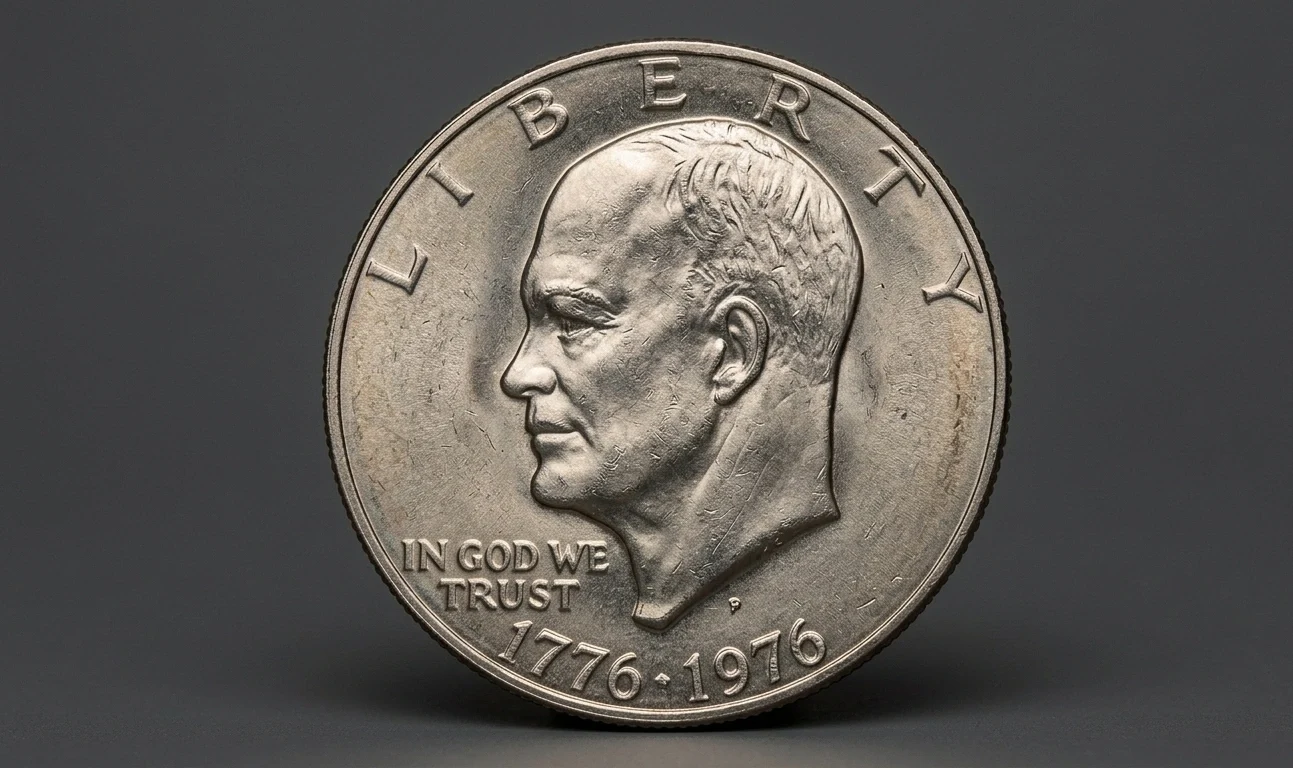
Production of these currency units occurred between 1975 and 1976, celebrating the United States independence anniversary.
Government authorities authorized a unique reverse design featuring the Liberty Bell over the Moon surface.
Total mintage numbers reached hundreds of millions, making most specimens common today.
Classification of all existing pieces follows the metal type and strike quality.
| Minting Location | Mark | Metal Type | Purpose |
| Philadelphia | None | Copper-Nickel | Circulation |
| Denver | D | Copper-Nickel | Circulation |
| San Francisco | S | Copper-Nickel | Collector Sets |
| San Francisco | S | 40% Silver | Investment Sets |
Using Silver was strictly limited to special collector versions.
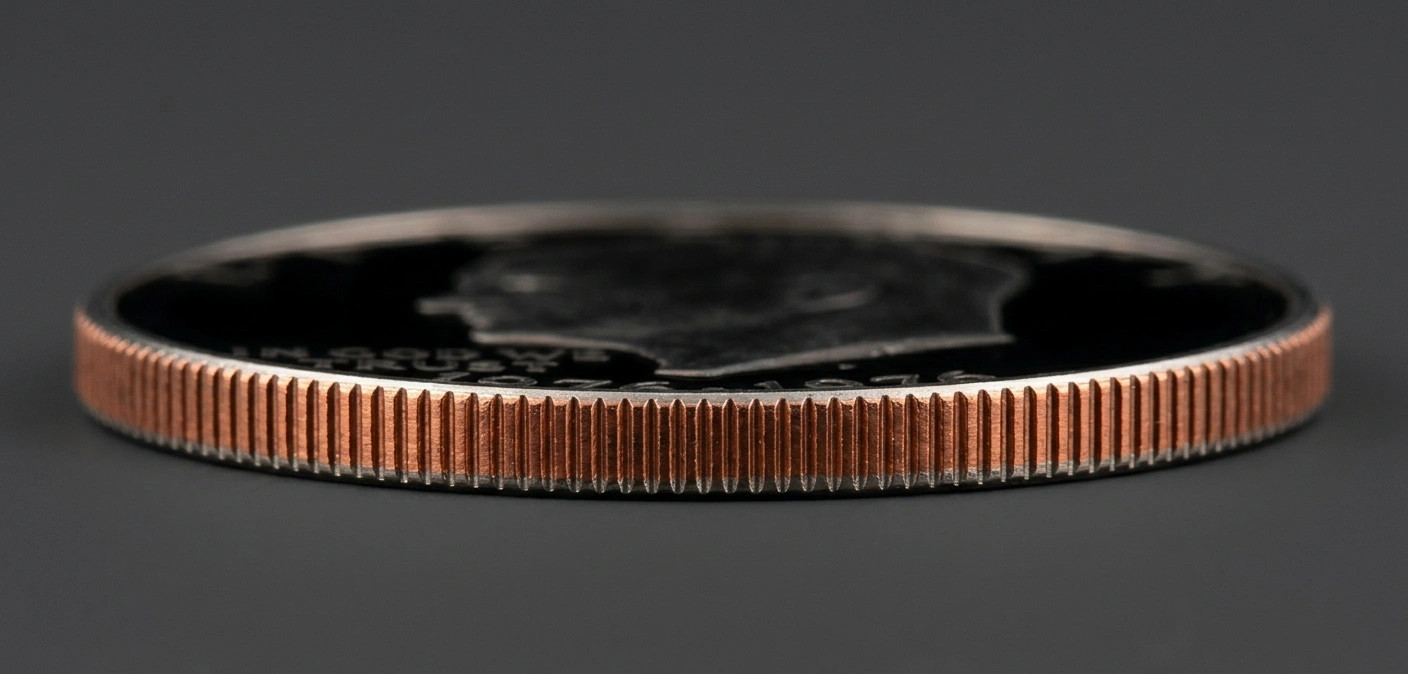
Standard circulation coins consist of a Copper core with a Copper-Nickel outer layer.
Technical Specifications for the Dollar Type
Physical dimensions remain constant for all Dwight Eisenhower obverse variations.
| Parameter | Copper-Nickel Value | 40% Silver Value |
| Total Mass | 22.68 grams | 24.59 grams |
| Pure Silver Weight | 0 grams | 9.83 grams |
| Body Diameter | 38.1 mm | 38.1 mm |
| Edge Thickness | 2.58 mm | 2.58 mm |
| Outer Layer | 75% Copper, 25% Nickel | 80% Silver, 20% Copper |
| Inner Core | 100% Copper | 21% Silver, 79% Copper |
Mass difference equals 1.91 grams.
Authenticating a Silver specimen requires using calibrated scales.
Mintage Dynamics and Rarity Impact
Manufacturing volume correlates directly with current market value.
- Philadelphia (Type 1): 4,019,000 pieces
- Philadelphia (Type 2): 113,198,000 pieces
- Denver (Type 1): 21,048,710 pieces
- Denver (Type 2): 82,179,564 pieces
- San Francisco (Silver, Uncirculated): 11,000,000 pieces
- San Francisco (Silver, Proof): 4,000,000 pieces
Type 1 features bold lettering on the United States of America reverse inscription.
Type 2 utilizes thinner and sharper letters introduced mid-1975.
Rarity for Philadelphia Type 1 remains higher due to lower production volume.
Price Indicators for Copper-Nickel Coins in 2026
Most circulated coins hold a value of exactly $1.
Specimens maintaining high preservation levels show price growth.
- MS63 → $5
- MS65 → $25
- MS66 → $110
- MS67 → $4,500
Annual price increases for MS67 category average 12% under stable demand conditions.
Values for coins graded below MS60 drop 2% yearly due to inflationary pressure.
Auction records for Copper-Nickel 1776-1976 dollars reach $26,400.
Investment Analysis for 40% Silver Versions
Silver coin pricing follows global precious metal market trends.
Intrinsic metal value at $35 per 31.1 grams equals approximately $11.07 per unit.
→ Rising Silver prices by 10% increases base coin value by $1.10.
→ Falling market rates by 5% reduces liquidation value by $0.55.
| Coin Condition | 2026 Market Price | Metal Premium |
| Uncirculated (sealed) | $18 | 62% |
| Proof (in box) | $22 | 98% |
| MS68 (Certified) | $145 | 1209% |
| MS69 (Certified) | $5,800 | 52300% |
Certification by professional grading services enhances asset liquidity significantly.
Finding MS69 grades remains difficult because of original packaging limitations.
Font Variations and Identification Factors
Distinguishing letter shapes on the reverse represents a primary task for professional appraisers.
Locating a Type 1 coin in perfect condition yields substantial profit for owners.
Font parameter comparison:
- Wide letters → Lack of clear serifs → Type 1.
- Thin letters → Sharp edges present → Type 2.
Discontinuing Type 1 occurred because of technical minting difficulties.
First type dies wore out quickly leaving blurry outlines.
Switching to Type 2 allowed extending die service life.
Record Sales and Statistical Anomalies
Reviewing Heritage and Stack’s Bowers auction data reveals unique cases.
Selling a 1776-1976 D coin in MS67 condition for $12,000 confirms grading importance.
Five-year price statistics highlight the following trends:
- Low grades (MS60-MS63): Price stagnation at $5-$8
- Medium grades (MS64-MS65): Growth at 5% annually
- High grades (MS66+): Growth at 15-20% annually reflecting supply deficits
Probability of finding a rare grade in standard change stays below 0.0001%.
Most coins found in circulation exhibit surface damage.
Proof Category Coin Evaluation
Mirror-like finish coins originated exclusively from San Francisco.
Having sharp contrast between frosted images and reflective fields increases value.
Deep Cameo category ranks highest among Silver and Copper-Nickel sets.
- 1976-S Silver Proof (PR69 Deep Cameo) → $45
- 1976-S Silver Proof (PR70 Deep Cameo) → $2,200
- 1976-S Cu-Ni Proof (PR69 Deep Cameo) → $15
- 1976-S Cu-Ni Proof (PR70 Deep Cameo) → $950
Price drops for PR70 coins reached 3% last year following higher certification counts.
Market stability for PR69 remains consistent over the decade.
Factors Reducing Market Value
Specific defects make a coin unattractive for investors.
Mechanical damage occurs during coin-to-coin contact inside mint bags.
- Scratches on Eisenhower’s face → Price reduction by 70%.
- Corrosion on the Copper core edge → Loss of collector status.
- Cleaning marks from abrasive materials → Total premium elimination.
Cleaning a coin with liquids destroys surface microstructure.
Such actions remain easily detectable by experts using microscopes.
Dirty coins hold more value than coins subjected to mechanical cleaning — check it via a coin identification app.
Minting Errors and Rare Defects
Production flaws can increase a standard dollar’s value significantly.
Identifying a defect requires thorough visual inspection.
- Off-center strike → Price $150 – $400.
- Wrong planchet strike → Price $2,500 – $8,000.
- Double die strike → Price $500 – $1,200.
Missing mint marks on 1975 Proof Silver coins represent legendary errors.
Such specimens carry values in the hundreds of thousands existing in tiny quantities.
Standard coins without marks from Philadelphia do not constitute errors.
Supply and Demand Balance
Interest in the Bicentennial anniversary remains stable fifty years later.
United States markets consume up to 95% of traded Eisenhower dollars.
International demand covers the remaining 5% focusing on Europe and China.
→ Growing collector numbers in Asia support MS66 price increases.
→ Decreasing youth interest in physical coins slows mass grade price growth.
Investment appeal for 1976 Silver sets exceeds Copper-Nickel sets.
Dual value involving numismatics and metal content drives this preference.
Professional Appraisal Procedures
Confirming MS67 or higher grades requires shipping coins to specialized centers.
Professional certification costs starting from $30 per unit or FREE if you use the best free coin identifier app.
Shipping and insurance expenses might add another $20.
Economic viability for grading arises only when expected coin prices exceed $100.
Certifying a $10 coin results in financial loss.
Grading companies use the Sheldon scale from 1 to 70 points.
Each point above 65 increases market value exponentially.
Toning Effects on Collector Value
Natural metal color changes caused by environmental exposure define toning.
Rainbow toning on Silver Eisenhower dollars counts as a premium feature.
Vibrant blue and gold shades add up to 200% to the price.
Black or dark brown toning often receives negative feedback.
Auction buyers prefer coins with original mint luster.
Preserving luster under a toning layer confirms lack of mechanical cleaning.
Comparative Analysis with Morgan Dollars
Eisenhower dollars rank lower in popularity than Morgan dollars.
Lower Silver content makes them less attractive to classical investors.
Availability of lower prices allows beginners to build complete collections.
Total cost for a complete Eisenhower collection in MS65 equals around $1,200.
Similar Morgan dollar collections require investments exceeding $50,000.
Low entry barriers ensure constant new participant flow into the market.
Safe Purchase Rules on Secondary Markets
Acquiring valuable specimens requires caution because of counterfeit existence.
Counterfeits often imitate Silver luster using spray coatings.
- Checking weight with 0.01 gram precision.
- Inspecting edges for seams or color changes.
- Magnetic testing (Nickel coins might show weak reactions).
- Using resonance frequency apps to test metal sound.
Buying coins in slabs with certificate number verification represents the safest method.
Holograms on slab stickers confirm evaluation legitimacy.