
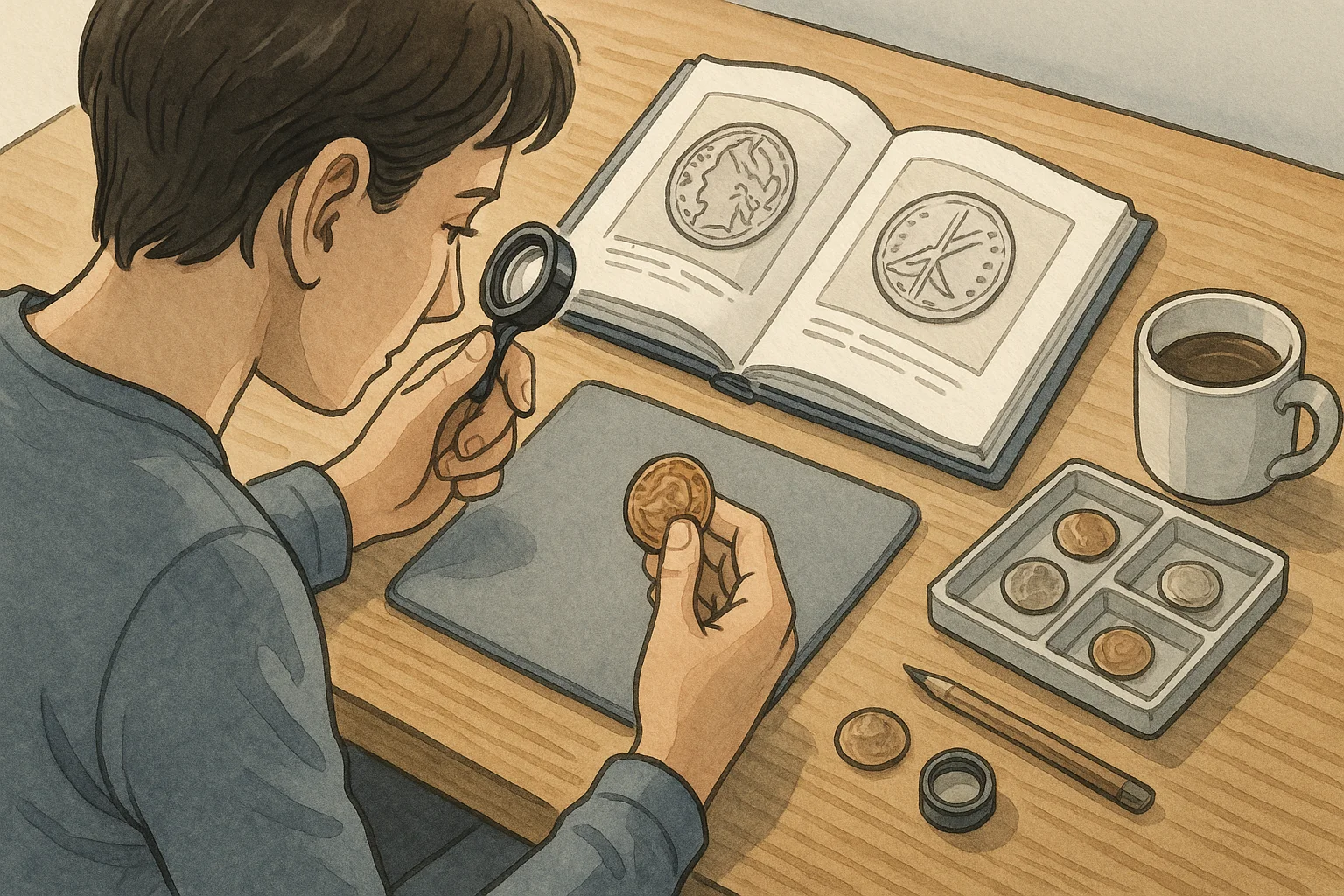
New collectors often rely on obvious traits: age, shine, or a coin’s general appearance. These signs feel intuitive but rarely match how rarity forms. The real indicators hide in places beginners barely check—tiny mint marks, faint doubling, metal inconsistencies, or small design distortions created during the striking process. Missing these signals leads many to missing diamonds compatible with the 1943 steel penny value, even when searching dealer trays, pocket change, or inherited boxes.
Why Subtle Markers Determine True Rarity
Market data from major price references shows a recurring pattern: high-mintage years still hide low-population coins because only a fraction survive with particular die varieties or unusual striking outcomes. A coin that appears common at first glance can shift into the premium category once the right marker is confirmed. This contrast explains why experienced collectors use loupes, angled lighting, and a digital coin identifier during every inspection.
Beginners usually make three consistent mistakes:
- They focus on dates instead of production traits.
Rare varieties often exist inside years produced by the millions. - They check only the obverse.
Many valuable errors, clash marks, and doubling features sit on the reverse. - They skip magnification.
Weak mint marks, repunched letters, and hairline breaks disappear without proper lighting and a 10× tool.
Understanding the markers below helps move from surface-level sorting to informed evaluation.
Faint or Repunched Mint Marks
Mint marks act as direct windows into scarcity. Their size, shape, and position often determine whether a coin is common or a hidden standout.
Key points beginners miss:
- Weak impressions can look like dust specks.
The 1916-D Mercury Dime is the classic example. Its weak “D” sits low and shallow, often blending into the field. Even in circulated grades, the piece brings $800+ because genuine examples remain scarce. - Repunched mint marks (RPMs) show overlapping outlines.
On coins such as the 1937-D Buffalo Nickel, the doubled shape exposes the die being punched twice. Authentic RPMs add strong value, while sloppy or mismatched shapes often signal counterfeits. - Misaligned mint mark styles help identify fakes.
Each era used specific punch shapes. A wrong curve, serif, or placement can instantly expose a forgery—something newcomers rarely verify.
Marked list for clarity:
- Look for faint or shallow letters.
- Check edges of mint marks for doubling.
- Compare shapes to verified reference images in the coin value app.
- Use angled light to reveal punch distortion.
Strong mint marks do not always equal rarity, yet weak or repunched marks frequently point to low-mintage runs that push prices far beyond typical examples from the same year.
Overlooked Die Varieties and Doubles
Die varieties form when the dies themselves have defects or misalignments. These traits replicate across every coin produced before the die is replaced. This makes varieties important: they may appear only in small batches yet carry major premiums.
Typical oversight areas:
- True doubled dies show thick, separated lines on dates, rims, letters, or devices.
The 1955 Lincoln Cent remains the most recognized case. Even in worn condition, it reaches $500–1,000 because the doubling is strong, unmistakable, and tightly linked to one defective die. - 1969-S doubling hides in the word LIBERTY and parts of the date.
The variety is dramatic under magnification but subtle enough that pocket-change finds still occur. - Reverse anomalies, such as missing legs on the 1937-D Buffalo Nickel, often escape quick inspection.
These traits are easy to miss because many beginners examine only the obverse first. - Die clashes create faint outlines from the opposite side of the coin.
These marks appear when dies strike each other without a planchet between them. On certain 1980s cents, clashes produce notable premiums.
A simple diagnostic table clarifies the typical rarity boosts:
| Marker Type | Example Coin | Approx. Boost (Circulated) |
| Weak Mint Mark | 1916-D Mercury Dime | $800+ |
| Doubled Die | 1955 Lincoln Cent | $500–1,000 |
| Filled Die Date | 1900s Various Errors | $100–300 |
| Repunched Mark | 1937-D Buffalo Nickel | $200+ |
| Die Clash | 1983 No Mintmark Cent | $50–150 |
These numbers vary by grade, but the pattern stays consistent: varieties outperform standard strikes even when worn.
Incomplete Dates From Die Errors
Beginners often mistake incomplete dates for damage, but many examples come from production flaws. These coins gain interest because they document Mint conditions at the moment of striking.
Two recurring forms appear most often:
- Filled-die dates, where grease or debris blocks part of the die.
The result is a date missing one or more digits—19__ for instance. Authentic pieces fall into the $100–500 range depending on clarity. - Die cracks that obscure digits, especially on early 1900s coinage.
These cracks sometimes link devices, distort rims, or create visual “bridges.” When a crack hides the final digit of a date, the coin can resemble a mule.
Spotting tips:
- Use side lighting to reveal raised metal from cracks.
- Compare missing digits to known filled-die listings.
- Check for uniformity—damage rarely leaves clean, smooth recesses.
These production flaws show why dates alone do not define rarity. The structure of the strike matters equally.
Wrong Composition or Planchet Flaws
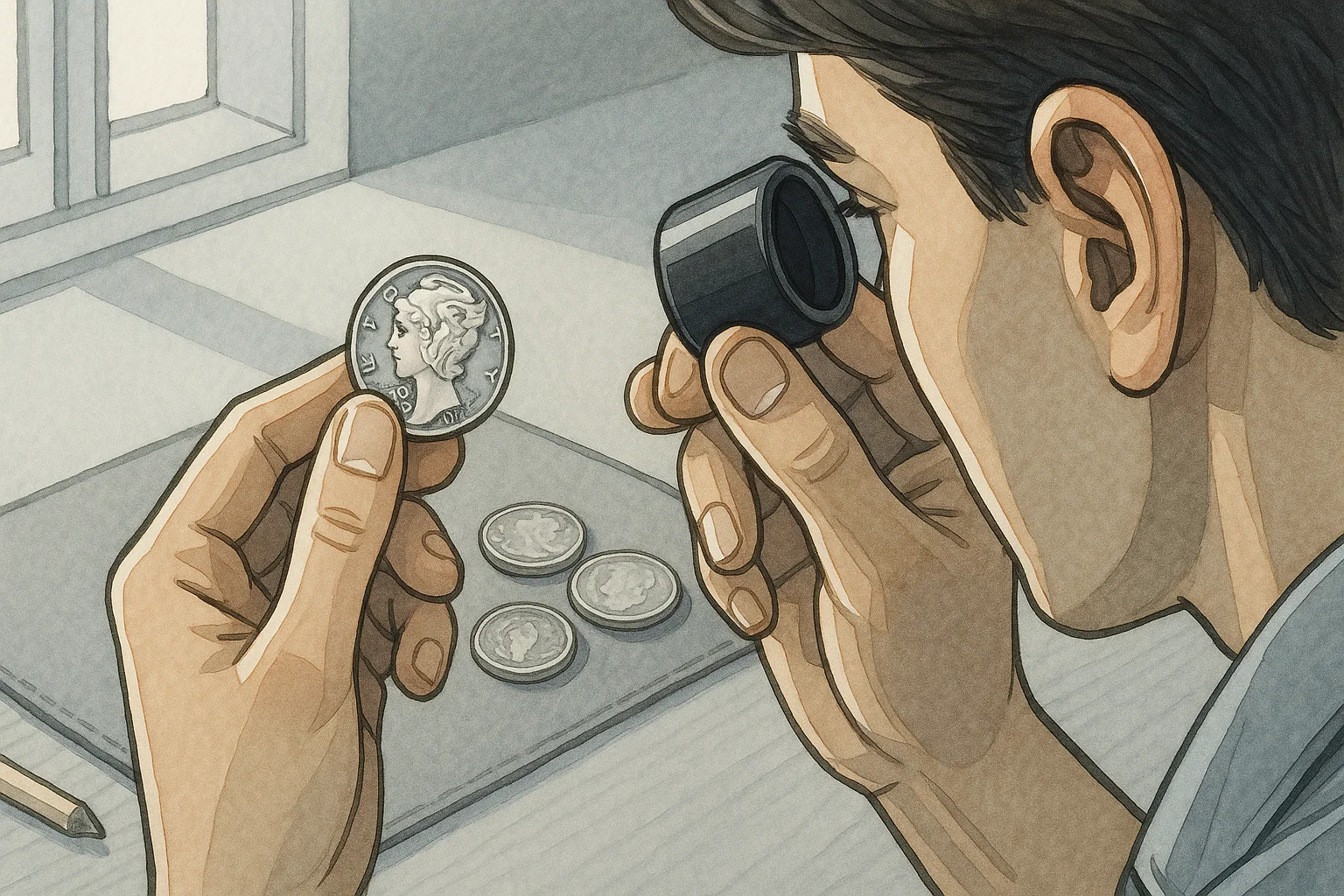
Composition errors occur when a coin is struck on a planchet intended for another denomination or metal type. These pieces are scarce by nature because they result from brief lapses during feed processes. Most beginners skip these checks, assuming odd colors or light weight reflect damage.
Key examples include:
- 1943 bronze Lincoln cents
These should be steel, yet a small group was struck on leftover bronze planchets. They weigh about 3.11 g, tone differently, and do not react to magnets. Authentic examples exceed five figures in certified grades. - 1944 steel cents
These represent the opposite scenario: steel planchets remaining in the press a year after the switch back to bronze. Even circulated pieces can reach $10,000+ due to extreme scarcity. - Clipped planchets
Improper sheet alignment creates curved or straight clips. Genuine clips show tapered metal flow, not sharp cuts. Minor clips bring modest premiums, but larger ones attract strong collector interest. - Lamination flaws
Poor metal bonding causes thin layers to peel away. While not as valuable as wrong-metal errors, clean lamination patterns remain collectible and often misunderstood by new hobbyists.
Checklist for fast sorting:
- Confirm weight with a reliable scale.
- Test steel-era cents with a small magnet.
- Inspect rims for shape distortions or missing metal.
- Compare patina to standard alloy behavior.
Composition anomalies rarely appear in bulk finds, yet one correct identification offsets hours of routine sorting.
Incomplete, Filled, or Distorted Dates Revisited
While Section 1 addressed missing digits caused by filled dies, composition issues sometimes amplify these effects. When the metal mixture is inconsistent, dates may appear soft, patchy, or partially erased even when circulation wear is not extreme.
Important observations:
- Soft dates on steel cents often signal improper plating rather than damage.
- Thick raised edges around distorted digits usually indicate internal die failure, not tampering.
- Uneven color around the date can hint at underlying metal separation.
These details matter because they help distinguish natural production flaws from post-mint damage, which holds no premium.
Verification Without Guesswork
Beginners often assume that identifying rarity relies on intuition. In practice, verification grows from repeatable steps that transform uncertain impressions into confirmed traits.
A simple method keeps evaluations consistent:
- Use angled light.
Rotate the coin slowly. Subtle doubling, mint mark distortions, or clash outlines appear strongest when the surface catches the beam sideways. - Check weight and diameter.
Even minor deviations signal wrong-metal planchets or striking defects. Standard values for U.S. coins are well documented, so mismatches stand out immediately. - Cross-reference mintage data.
High-mintage years are not automatically common. Small die-variety groups inside large production runs can be surprisingly scarce. - Record each find.
Logging coins reduces the chance of overlooking patterns across rolls or bags. Systematic sorting reveals anomalies faster than casual inspection.
Modern tools simplify these checks. The Coin ID Scanner app identifies coins from photos and provides detailed cards that list years of minting, country, type, edge format, composition, diameter, weight, and approximate market ranges. Its database covers more than 187,000 coins, making it a useful reference when a surface marker appears unfamiliar. The app does not replace manual grading, but it helps newcomers avoid misidentifying obvious varieties.
Many collectors also appreciate its collection management tools for organizing finds, while the premium smart filters and AI Helper refine searches during large sorting sessions. These features make the process faster and reduce common beginner errors.
Using References to Confirm Rarity Markers
No collector relies solely on visual memory. Rarity markers demand comparison against verified references, especially when a piece seems unusual but not immediately identifiable.
Useful reference strategies include:
- Cross-checking against established catalogs
Population data from reputable grading companies, mintage records, and official Mint documentation all help determine whether a feature is consistent with known varieties. - Consulting die variety maps
Detailed diagrams of doubled dies, RPM locations, and clash patterns help match subtle markers to recognized listings. - Participating in forums and attribution groups
Community experts often identify anomalies faster than standalone research. These platforms maintain large archives of examples and offer feedback on borderline traits. - Maintaining a personal photo archive
Recording unusual finds builds a visual library, allowing quick comparison when similar features appear in later searches.
These methods ensure that rarity evaluations remain grounded in evidence rather than assumptions.
Rarity in U.S. coins rarely announces itself. It appears in faint mint marks, subtle doubling, incomplete digits, unexpected metal compositions, and hidden die flaws. Beginners often pass over these traits because they focus on surface impressions instead of production markers. With proper lighting, magnification, reference checks, and well-organized workflow habits, collectors can detect these features reliably.
Once practiced, these skills reveal how frequently small anomalies turn a common strike into a standout find. The combination of visual discipline, structured sorting, and supportive digital tools helps collectors recognize rarity with confidence and build collections grounded in informed evaluation rather than guesswork.